

Michelle Willms Interview on Northern Girls
Michelle Willms’s Northern Girls is a courageous collection of true stories about growing up in rural northern Ontario amid instability, silence, and survival. I’ve had the privilege of getting to know Michelle at our local writers’ group. And I’m delighted to be able to celebrate the publication of her first book with her. 🥳
In Northern Girls, Michelle reflects on a childhood shaped by frightening and often unbelievable moments. Yet the book is not driven by shock. It’s about endurance, generational trauma, parental addiction, domestic violence, and the long, bumpy road toward healing. In this interview, Willms speaks with honesty and care about memory, silence, survival, and self-honouring.
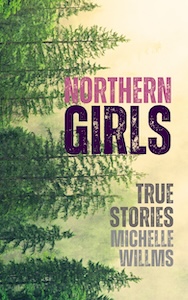
One of CBC’s 50 top nonfiction titles for spring 2026!
Surviving wolves in the woods, a chimney fire, and a home ruled by addiction and sometimes violence, Michelle Willms should not have made it out of her northern Ontario childhood, but she did. Northern Girls (Baraka Books) is a raw, gripping collection of true stories that trace a fractured family legacy and the generational trauma behind it, as Willms writes her way toward truth, trust, and healing. (releases April 1, 2026)
Let’s Dig Right into my Interview Questions for Michelle
What is Northern Girls about?
Northern Girls is my creative nonfiction story collection and memoir about growing up in northern Ontario with a mother who coped with memories of her own difficult northern childhood by self-medicating with alcohol and romantic relationships that she believed would save or complete her. In the mix of all the messiness, including violence, my siblings and I leaned on each other, our friends, and the community for safety.
Why did you write Northern Girls as a collection of true stories?
I wrote Northern Girls somewhat reluctantly, and over a long period of time. I’d been told repeatedly growing up that “What goes on in this house stays in this house.” So, every time I wrote about my childhood, it felt like I was breaking the sacred family rule. But I realized over time that honouring family rules that harm me meant dishonouring myself. That said, the family rule has never stopped haunting me. While writing, I had to get comfortable holding space for both feelings: disappointing the people I love who benefit from silence, and honouring myself by writing about what happened.
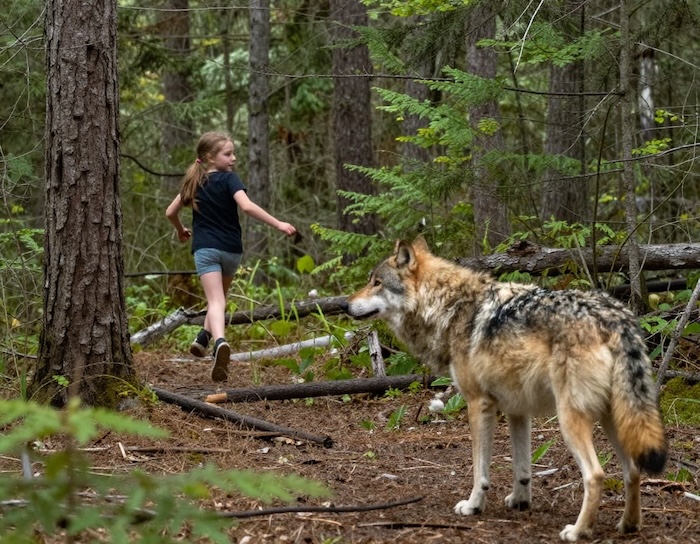
Your childhood includes moments that sound unreal. How do you tell those stories without turning them into shock value?
Sadly, what took place in my childhood is a variation of the lived experience of many kids who also grew up in households with violence and addictions. There’s more of us than society is sometimes comfortable acknowledging. The primary function of writing, for me, is to find personal healing by acknowledging what happened. I hope reading Northern Girls heals and frees others who’ve experienced adversity in their childhoods, too. For those who feel shocked by my work, I’d encourage them to acknowledge that these types of experiences (abandonment, fear, and being regularly put in danger) are normal for a lot kids, and to emotionally metabolize their shock into empathy.
Me again: That’s a helpful suggestion. Thank you.
When did you realize your family’s pain was bigger than one generation?
The knowledge that my family’s pain was bigger than one generation was a layered realization and took time. My mom told me she was poor growing up, but I didn’t learn about how she’d been abused until I was older. My family filled in a lot of the blanks after my mom died, though a few times it seems that Mom tried to show me in her own way. I write about this in my story “On Impact.”
How do you write about parental addiction and domestic violence with care for survivors and for your own younger self?
In a word: research. I’ve read widely and took note of how other nonfiction writers take care of their readers and themselves when writing about addiction and violence. Mary Karr, for example, during one of her most difficult scenes in The Liar’s Club, keeps things to the point. She doesn’t linger. She states the harm clearly, then moves on. She shows the physical impact, but doesn’t expound on the emotional impact right after. I think that creates a safety buffer for readers in a way, and gives them time to process what they just read on their own terms, without telling them how to feel about it. It also takes the pressure off the writer to have the emotional math “all figured out” when sometimes we don’t. And won’t for years (if ever).
After your mother’s sudden death in 2001, what did writing help you understand, and what did it not solve?
After Mom died, writing helped me piece together what had happened to her in childhood and adulthood. And it helped me process how her choices impacted me. Unfortunately, trauma is not a puzzle to be solved, nor is grief. I was ashamed of my history and felt like it was “too much” for others, and therefore that I was “too much.” I accept now that I am shaped by it, for better or for worse. Through therapy, I have learned to carry the trauma and grief in more productive ways, and to face it and acknowledge it. It’s messy and hard being a human, but it can also be beautiful and wonderful.
If a reader grew up with chaos, what do you hope they feel after the last page?
More than ever, I want readers to feel seen and less alone, and to feel permission to tell their own story if they choose. I want them to feel the freedom to take steps toward safety and support.
Has your faith helped you work through the traumas that no child should have to face?
It has. Though I was highly suspect of God and God’s existence for quite a while given what I experienced as a child, and with all the suffering in the world. But a few months after the difficult summer that I wrote about in my nonfiction story “On Impact,” some new friends invited me out to their church youth group. I reluctantly went, and the leaders gave me a Bible. Then one night when I was alone in my bedroom at my dad’s house, feeling quite low, I tested God.
I made a pact: I’d get the Bible off my shelf, randomly open it, and if the words I read in the text showed proof of His care, I’d be open to the idea of God’s existence and a relationship. With the pact made, I randomly opened my Bible. I let my finger fall on the page, and it landed on Psalm 27. I started reading and after I read verse 10, I froze. Then I read it over and over and over again. I’d never felt more seen in my life. It said, “Though my father and mother forsake me, the LORD will receive me.” That was the moment everything changed for me.
Me again: Wow, that is so cool. It gave me goosebumps to read it. Now for my last question:
How might believers support children, youth, adults dealing with these situations?
Please approach children, youth and adults dealing with these situations with gentleness, love, compassion, and absolutely no judgement. Do not pressure abused people to forgive their abusers and move on quickly from trauma. These reactions and directives actually become secondary traumas for many of us. Sometimes just listening with a compassionate ear is enough. Bearing witness by acknowledging the harm we experience is one of the most powerful ways you can show support. Don’t try to fix us; you can’t. And if a child discloses harm, it is very important to report it.
Me again: That’s very good to know. Michelle thank you so much for joining me here, today.
Readers’ Turn:
Northern Girls is an honest and moving book about growing up in rural northern Ontario amid trauma and silence. As you no doubt sensed from her interview, Michelle Willms writes with courage and care, offering not just a record of survival, but a path toward greater understanding and healing.
If this conversation resonated with you, consider picking up Northern Girls (you’ll find some store links below). Also share this interview with a friend who appreciates memoirs, true stories, and thoughtful nonfiction. And if you do read the book, leaving a review is a simple way to support Michelle Willms and help more readers find her book.
If you’d like to ask Michelle a question, scroll to the bottom of the page (past my bio and similar posts section) to find the comment section. If this is your first time leaving a comment, please understand it won’t appear on the site until I’ve had a chance to confirm it’s not written by a spambot trying to promote a weird website. 🧐
Michelle Willms Suggests this Reflection Prompt for Readers 🤔:
“How was I taught to protect the family, and did it come with a personal cost? What was the cost, if there was one, and how can I now honour myself?”
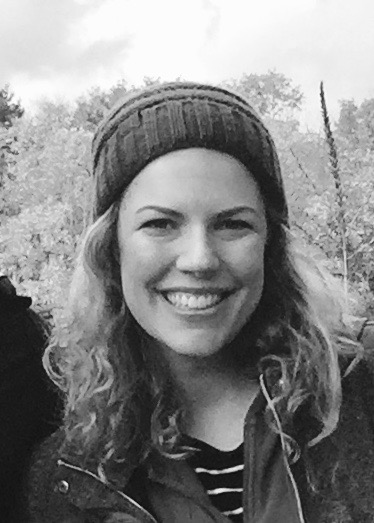
About Michelle Willms
Michelle Willms had a difficult childhood, as many kids do, and after the tragic loss of her mother in 2001, she started writing about her childhood in the north as a means to understand how things broke down, to better understand generational trauma, and to find healing. Michelle, her husband, and their four children live in the Niagara region and enjoy hiking, swimming, drawing cartoons, playing board games, travelling, and baking together. They adopted two rescue cats, Whiskers and Cloudy, and their family is now complete.
You can connect with Michelle on:
- Instagram: @mishwillms
- BlueSky: @michellewillms
Find Northern Girls at: Chapters; Amazon Canada; Barnes & Noble US, preorder for April 1st release



Sandra, thanks so much for inviting me to visit your blog. I’m happy to respond to any questions your readers might have.
It’s been a privilege having you. Thank you for joining me!